Selling a parent’s house as the executor in Texas creates unique legal and emotional challenges that most families face without guidance. While you have the legal authority to manage estate property, understanding the specific steps, requirements, and potential pitfalls protects both you and the beneficiaries. Texas probate law provides executors with significant power, but that power comes with serious fiduciary responsibilities, especially when handling the estate’s most valuable asset. In this blog post, Texas probate real estate expert Dallas Seely discusses the complete process for selling a parent’s house as executor in Texas, including legal requirements and practical strategies.
Key Takeaways
- Independent executors with a Power of Sale can sell the house without court approval, streamlining the process significantly
- Letters Testamentary are required before any executor can legally sign contracts, list property, or accept offers in Texas
- Fiduciary duty requires fair market value sales—executors must obtain independent appraisals and cannot sell below market to benefit themselves or others
- Multiple offers within 24 hours from The Probate Realtor’s network eliminate traditional delays and provide executors with competitive options
Yes, an executor in Texas can sell a parent’s house, but the process depends on the type of probate administration. An independent executor with a “Power of Sale” clause in the will can sell property without prior court approval. However, a dependent executor must obtain a court order before listing the home or accepting an offer. Both types of executors must have official Letters Testamentary from the court before they can legally sign any contracts.
To Discuss Your Inherited Property Sale, Call or Text (512) 777-9530 Today for Multiple Offers Within 24 Hours.
Call Today To See How Much Your Inherited Property Is Worth – Sell Your Inherited Property Before Probate
Dallas Seely specializes in Texas probate real estate, having helped hundreds of executors navigate the complex intersection of estate law and property sales. With over $700 million in career sales and a probate attorney on staff, The Probate Realtor provides both real estate expertise and legal guidance. This dual-expertise approach ensures executors receive guidance on both legal requirements and practical strategies for a successful sale.
Understanding Your Authority as an Executor in Texas
When named as the executor, your legal authority to act on behalf of the estate isn’t immediate. A common misconception is that being named in the will allows you to start selling property right away. In Texas, your power is officially granted by a probate court, not by the will itself. The will nominates you for the role, but the court confirms your appointment and gives you the legal documents to proceed.
This distinction is crucial for protecting you from liability. Any actions taken before the court grants authority, such as signing a listing agreement, could be considered invalid. The key document that empowers you to sell the house is called Letters Testamentary.
What Are Letters Testamentary?
Letters Testamentary are the official court documents that prove you have the legal authority to act as the executor of an estate. You cannot legally sell, transfer, or even list the property without them. Obtaining these letters is one of the first major milestones in the probate process. In major Texas counties, the timeline to receive them varies. For example, Harris County probate courts typically issue Letters Testamentary within 3-5 weeks of the initial hearing, while Travis County may average 4-7 weeks due to higher case volumes.
Independent vs. Dependent Administration
The type of probate administration dramatically impacts how you sell the property. Texas law provides for two main types, and the decedent’s will usually specifies which one to use.
- Independent Administration: This is the most common and efficient method in Texas. If the will includes a “Power of Sale” clause, an independent executor can sell the house without seeking court approval for every step. You can list the property, negotiate offers, and close the sale on a timeline similar to a traditional real estate transaction.
- Dependent Administration: This process involves significant court oversight. The executor must get permission from the court to take almost any action, including listing the property, accepting a specific offer, and paying for repairs. Each request requires a formal application and a court hearing, adding months to the sale process.
Independent vs. Dependent Administration in Texas: Executor Authority & Timeline Comparison
| Administration Type | Executor Powers | Court Approval for Sale | Avg. Timeline (Harris Co.) | Avg. Timeline (Dallas Co.) | Avg. Timeline (Travis Co.) | Avg. Timeline (Bexar Co.) |
|---|---|---|---|---|---|---|
| Independent | Broad & Autonomous |
(with Power of Sale in will) |
4-6 Months | 5-7 Months | 5-8 Months | 4-7 Months |
| Dependent | Highly Restricted |
(for all major actions) |
8-14 Months | 10-16 Months | 10-18 Months | 9-15 Months |
Frequently Asked Questions
The Complete Texas Probate Process for Selling a House
Selling a home during probate involves parallel tracks of legal requirements and practical real estate tasks. Understanding this sequence helps you manage expectations and avoid costly delays. An experienced probate specialist can guide you through both sides of the process, ensuring compliance with court rules while maximizing the property’s value.
Phase 1: Immediate Actions After Death (Weeks 1-4)
Before you are formally appointed by the court, there are critical steps you can and should take to protect the estate’s assets. During this initial period, you act as a custodian of the property. You should:
- Secure the property by changing the locks and ensuring the home is safe
- Locate the original will and provide it to your chosen probate attorney
- Obtain multiple certified copies of the death certificate
- Interview and hire a probate attorney to file the application with the correct county court
Phase 2: Probate Application and Court Hearing (Months 1-2)
Once you’ve hired an attorney, they will file the application to open probate. This phase involves formal court procedures that lead to your official appointment as executor. This is when you will attend a court hearing, where a judge will validate the will and officially grant you Letters Testamentary. Within 90 days of your appointment, you must file a detailed inventory of all estate assets, including a professional appraisal of the real estate, with the court.
“The 90-day inventory deadline is firm under Texas law. Executors who miss this deadline may face court sanctions or removal. The Probate Realtor works with certified appraisers across Texas to ensure executors meet all court requirements while preparing properties for optimal sale outcomes.” – Dallas Seely
Phase 3: Property Preparation and Marketing (Months 2-4)
With Letters Testamentary in hand, you now have the authority to manage the property sale. This phase shifts from legal filings to practical real estate decisions. You can now legally sign a listing agreement with a realtor who specializes in probate sales. This is also the time to decide on a sales strategy, such as selling the property as-is or making necessary repairs to improve its market value. The Probate Realtor can present multiple cash offers within 24 hours, giving you the option to bypass repairs and showings entirely.
Phase 4: Offers, Closing, and Proceeds Distribution (Months 4-6+)
After accepting an offer, the process moves toward closing. As the executor, you will sign all closing documents on behalf of the estate. The sale proceeds must be deposited directly into a separate estate bank account—never into your personal account. From this account, you will pay any remaining estate debts, administrative expenses, and attorney fees. Once all financial obligations are met, you can distribute the remaining funds to the beneficiaries according to the terms of the will.
How Long Does Probate Take in Texas?
The timeline for settling an estate and selling a house can vary significantly based on the type of administration and the county’s court docket. An independent administration is always faster, but delays can still occur if beneficiaries are in conflict or if the estate has complex creditor issues.
Independent Administration Timeline
For a straightforward estate with a cooperative family, selling a house through independent administration is the quickest path. Here are typical timelines from the date of death to the final distribution of sale proceeds:
- Harris County (Houston): 4-6 months
- Dallas County (Dallas): 5-7 months
- Travis County (Austin): 5-8 months
- Bexar County (San Antonio): 4-7 months
Dependent Administration Timeline
The requirement for court approval at each step makes dependent administration a much longer process. These sales often involve more legal fees and carrying costs for the property, reducing the net proceeds for heirs.
- Harris County: 8-14 months
- Dallas County: 10-16 months
- Travis County: 10-18 months
- Bexar County: 9-15 months
Do You Need Court Approval to Sell?
Whether you need a judge’s permission to sell the house is the most critical question for an executor. The answer lies in the will’s language and the type of administration granted by the court. An independent executor with a “Power of Sale” can act much like a traditional homeowner, making decisions without court oversight.
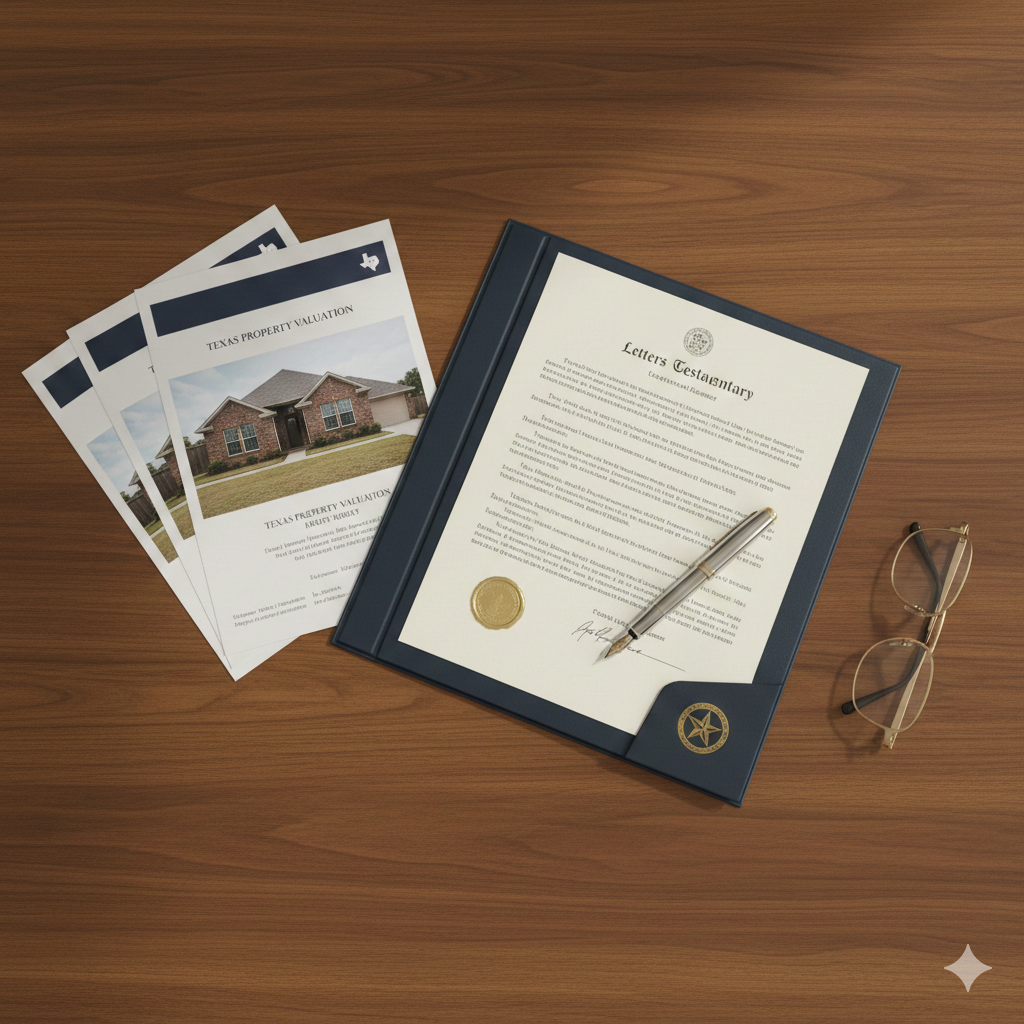
To determine your authority, first review the will for phrases like “independent executor,” “with power of sale,” or “without court approval.” Next, confirm with your probate attorney the type of administration they will file for. Finally, your official Letters Testamentary will clearly state whether you are an “Independent Executor” or require court supervision. If you are a dependent administrator, you must file an application and get a court order before you can sell the home.
A particularly high-risk situation is when an executor wishes to buy the property themselves or sell it to another family member. Texas law permits this, but it is considered a self-dealing transaction that invites scrutiny. To protect yourself from beneficiary lawsuits, you should obtain a third-party appraisal, provide full disclosure to all heirs, and seek court approval for the sale, even as an independent executor.
Can You Sell Property Without Beneficiary Approval?
In Texas, an independent executor with the power of sale does not legally need beneficiary consent to sell a house. Your fiduciary duty is to the estate as a whole, which means you must act in the best financial interests of all beneficiaries. This includes selling the property for fair market value and managing the process prudently.
However, acting without consulting the beneficiaries is often a recipe for conflict. While you may have the legal authority to proceed alone, transparency is the best policy. Keeping heirs informed about the appraisal, offers received, and the final sale price can prevent misunderstandings and potential legal challenges down the road. A probate specialist can help facilitate these communications and provide objective, third-party data to support your decisions.
“Transparency with beneficiaries isn’t just good practice—it’s your best protection against future disputes. When executors share appraisal reports and multiple offer details, heirs understand the process and trust the outcome. We help executors document every step to demonstrate they acted in the estate’s best interest.” – Dallas Seely
Why Choose Dallas Seely to Sell an Inherited Property
When you need to sell a parent’s house as an executor in Texas, working with a probate specialist is critical. Dallas Seely built The Probate Realtor to serve families facing these unique challenges, combining deep real estate knowledge with an understanding of Texas probate law. With over $700 million in career sales and a ranking in the top 0.1% of agents nationwide, he brings a proven track record of results. Our system delivers multiple offers within 24 hours, the ability to sell as-is is guaranteed, and our on-staff probate attorney provides integrated legal guidance. Learn more about Dallas Seely and his commitment to simplifying the probate process.
Serving Texas Families Throughout the State

While this guide covers general Texas law, The Probate Realtor serves executors and heirs across the entire state. Dallas Seely understands that probate properties can be located anywhere, and family members often live far from the inherited home, creating logistical challenges.
The Probate Realtor provides specialized services in all major Texas markets, including Austin, Dallas, Fort Worth, Houston, and San Antonio. Whether your property is in a major city or a small town, we have the network and expertise to help. Our remote consultation capabilities ensure distance is never a barrier to a smooth and efficient sale.
Ready to Move Forward? Let’s Talk About Your Inherited Property
Navigating probate real estate doesn’t have to be overwhelming. Having the right guidance makes all the difference. Whether you’ve just begun the probate process or you’re ready to sell an inherited property, we’re here to help.
Why Families Trust Dallas Seely with Their Probate Real Estate
Dallas Seely founded The Probate Realtor to help Texas families through challenging transitions. He brings both expertise and empathy to every probate situation. Most importantly, he has a proven track record of results.
Proven Track Record:
- Over $700M in career sales
- Top 0.1% of agents nationwide
- Top 3 real estate professional in Texas
- Top 10 in Central Texas
- 300+ families served annually
These aren’t just numbers. They represent hundreds of families who’ve successfully navigated probate real estate sales. Many did so during the most difficult times of their lives.
A Different Approach to Probate Real Estate
Most real estate agents treat inherited properties like standard listings. However, Dallas understands the unique pressures executors and heirs face.
Time-sensitive decisions create stress. Family dynamics add complexity. Property maintenance costs pile up. The weight of responsibility feels heavy. Because of these challenges, you need a specialized approach.
That’s why Dallas developed a streamlined process. It eliminates the traditional hassles:
- No repairs or improvements needed. You can sell the property as-is.
- No lengthy listing periods. Move forward on your timeline.
- No showings or open houses. Avoid the disruption and stress.
- Multiple offers within 24 hours. Compare options and choose what works best.
This isn’t about pushing a quick sale. Instead, it’s about giving you real options. You’ll get the information you need to make confident decisions during an uncertain time.
Comprehensive Support Beyond the Sale
The Probate Realtor offers more than just real estate services. We provide complete support throughout the entire process.
Full-Service Property Management: Managing an inherited property from a distance can be overwhelming. Therefore, we handle everything you need:
- Property clean-outs and estate sales. We coordinate professional services to clear the home.
- Vendor orchestration. We connect you with trusted contractors for any needed services.
- Regular property checks. Weekly inspections ensure the home stays secure.
- Title clearing and coordination. We work with title companies to resolve any issues.
Executor Support and Guidance: As an executor or heir, you’re navigating unfamiliar territory. We provide hands-on coaching throughout the real estate aspects of probate:
- Clear explanations of each step in the process
- Coordination with estate attorneys and other professionals
- Guidance on timing and decision-making
- Support with family communication about the property
Legal Guidance from Probate Attorney on Staff: Questions about probate procedures don’t wait for business hours. That’s why The Probate Realtor has a probate attorney on staff. This unique resource means you get both real estate expertise and legal guidance in one place. Whether you need clarification on court requirements, executor responsibilities, or heir rights, you have direct access to legal counsel.
Guaranteed Responsiveness: Questions don’t wait for business hours. That’s why we guarantee a response within 24 hours. This commitment sets us apart in an industry where responsiveness is often lacking. Your questions are always welcome. Your concerns are always addressed promptly.
Statewide Texas Expertise with Remote Convenience
Dallas serves families throughout the entire state of Texas. He has a deep understanding of Texas probate procedures. Additionally, he knows local market conditions across all regions. He also understands the unique challenges of inherited property sales.
Primary Markets Served:
- Austin
- Dallas
- Fort Worth
- Houston
- San Antonio
Your inherited property might be in a major metropolitan area. Or it might be in a smaller community anywhere across the state. Either way, Dallas has the expertise and network to help you achieve the best possible outcome.
Virtual Consultations Available: Many heirs and executors don’t live near the inherited property. Therefore, we offer complete remote services. You can handle everything virtually if needed:
- Initial consultations via video call
- Electronic document signing where permitted
- Regular updates via your preferred communication method
- Never need to visit the property if you choose not to
This flexibility means you can move forward regardless of where you live. Distance doesn’t have to slow down the process.
How Quickly Can You Move Forward?
Speed matters when you’re managing an estate. Here’s what you can expect:
Within 24 Hours:
- Multiple offers on your property
- Initial consultation scheduled
- Questions answered
Within 2-3 Weeks:
- Property sold and closed (if you choose this timeline)
- Funds distributed according to estate requirements
- Property responsibilities lifted from your shoulders
Throughout the Process:
- Regular communication and updates
- Coordination with all necessary parties
- Support every step of the way
Get Started Today
Every day spent worrying about an inherited property is a day you don’t get back. Let’s start a conversation about your situation. There’s no pressure and no obligation. Just honest guidance and real solutions.
Get Multiple Offers in 24 Hours Text “Probate” to (512) 777-9530
Or Schedule a Free Consultation Call (512) 777-9530 to speak directly with Dallas
Email: [email protected]
The probate process can feel heavy. But you don’t have to carry it alone. Dallas Seely brings decades of experience and proven results. He’s committed to serving families with compassion and integrity. Because of this, he’s the trusted partner you need during this transition.
Serving families across Texas through life’s hardest transitions.
Follow Us on Social Media
Follow Dallas Seely and The Probate Realtor on social media for Texas probate real estate insights, inherited property tips, and market updates. Connect with us on X (Twitter) and Instagram for expert guidance.
FAQ
What happens if I sell my parent’s house for less than market value?
Selling a house for significantly less than its fair market value can be considered a breach of your fiduciary duty as an executor. Beneficiaries could sue you personally for the financial loss to the estate. To protect yourself, always obtain a certified independent appraisal before listing the property and document all offers to demonstrate you acted in the estate’s best interest. Selling through a process that generates multiple offers, like the one offered by The Probate Realtor, is a strong defense against claims of not achieving the best possible price.
Can an executor use estate funds to repair the house before selling?
Yes, an executor can use funds from the estate to pay for reasonable repairs and maintenance necessary to preserve the property’s value or prepare it for sale. For an independent executor, this is a straightforward decision. For a dependent administrator, any significant repair costs may require prior court approval. It’s crucial to keep meticulous records of all expenses and ensure they directly benefit the estate, not any single beneficiary.