When a loved one passes away and leaves behind real property in California, the executor often faces an immediate and uncomfortable question: does every heir need to sign off before the house can be sold? The answer depends heavily on the type of authority the court has granted and the specific procedures followed under the California Probate Code. Executors are often surprised to learn that the law gives them significant power to move forward even when heirs disagree, provided the right steps are taken. Understanding the distinction between Full Authority and Limited Authority is the key to moving an inherited California estate forward without unnecessary delay or family conflict. In this blog post, California probate real estate expert Dallas Seely discusses whether an executor can sell an inherited California house without all heirs’ consent.
Key Takeaways
- Full Authority executors can sell without heir consent as long as they send a Notice of Proposed Action and no heir files a written objection within 15 days under California Probate Code §10580.
- Limited Authority executors must seek court confirmation, which adds 4 to 8 months to the timeline but still allows a sale over heir objection if the court approves.
- Heirs can object, but objections must be valid—courts do not accept emotional attachment or general disagreement as grounds to block a properly managed estate sale.
- A probate-specialist realtor compresses timelines significantly, with The Probate Realtor delivering multiple offers within 24 hours and closing in as little as 2 weeks on qualifying Full Authority sales.
In most California probate cases, an executor with Full Authority under the Independent Administration of Estates Act can sell an inherited house without obtaining consent from every heir, as long as proper notice procedures are followed. Heirs receive a Notice of Proposed Action and have 15 days to file a written objection, but silence equals consent under California law. For executors who need to move quickly, working with a probate specialist like Dallas Seely can compress the timeline to as little as 45 to 90 days from listing to close.

You Cannot Get From Anyone Else
Most agents can list a property. Very few can solve the problems that come with probate. These are the advantages Dallas provides that others simply can’t.


NO UPFRONT ATTORNEY FEES
Probate legal fees can be floated until closing.
Dallas works with a preferred probabte legal team that can advance costs, so families are not forced to pay major legal fees out of pocket upfront.
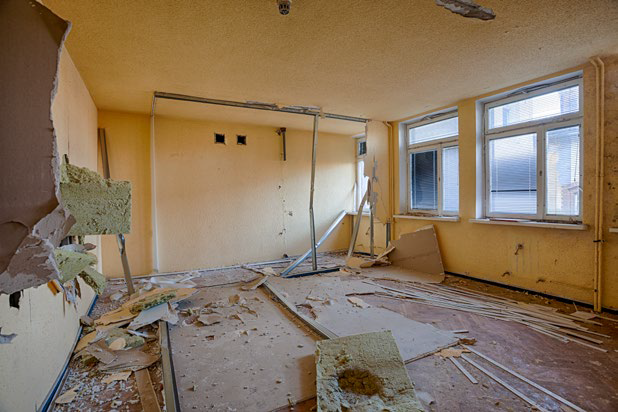

SELL IN ANY CONDITION
No repairs, cleanup, or prep required.
From deferred maintenance to harder conditions, Dallas has seen it all. The property’s condition does not have to delay the next step.


ACCESS MORE SERIOUS BUYERS
300+ institutional buyers. Multiple offers in 24 hours.
Dallas has access to a proprietary platform that exposes the property to major buyers across Texas, increasing speed and competitive pressure.


STOP THE PRESSURE FAST
Creditors and foreclosure can be stopped immediately.
Once the property is under contract, Dallas’s legal team can send notice to creditors and the mortgage servicer so proceedings pause immediately.
NO UPFRONT ATTORNEY FEES
Probate legal fees can be floated until closing.
Dallas works with a preferred probabte legal team that can advance costs, so families are not forced to pay major legal fees out of pocket upfront.
SELL IN ANY CONDITION
No repairs, cleanup, or prep required.
From deferred maintenance to harder conditions, Dallas has seen it all. The property’s condition does not have to delay the next step.
ACCESS MORE SERIOUS BUYERS
300+ institutional buyers. Multiple offers in 24 hours.
Dallas has access to a proprietary platform that exposes the property to major buyers across Texas, increasing speed and competitive pressure.
STOP THE PRESSURE FAST
Creditors and foreclosure can be stopped immediately.
Once the property is under contract, Dallas’s legal team can send notice to creditors and the mortgage servicer so proceedings pause immediately.
When the right person is guiding you, everything changes.
Ready to put these advantages to work?
To Discuss Your Inherited Property Sale, Call or Text (512) 777-9530 Today for Multiple Offers Within 24 Hours.
Dallas Seely specializes in California probate real estate and has helped hundreds of executors navigate exactly this situation, from straightforward Full Authority sales to contested multi-heir disputes. With over $700 million in career sales, a probate attorney on staff, and a network of pre-qualified buyers ready to move, The Probate Realtor is uniquely positioned to help executors sell inherited California property quickly, legally, and without unnecessary conflict.
California Executor Sale Authority: Full vs. Limited vs. No Authority
| Authority Type | Legal Basis | Heir Consent Required? | Process | Typical Timeline | Court Involvement |
|---|---|---|---|---|---|
| Full Authority (IAEA) | CA Probate Code §§10400-10592 | No — Notice only, 15-day objection window | Send Notice of Proposed Action, wait 15 days, close if no objection | 45-90 days | Minimal — no confirmation hearing required |
| Limited Authority (IAEA) | CA Probate Code §§10400-10592 | No — but court must confirm sale | Obtain referee appraisal, list property, accept offer, petition court for confirmation hearing | 4-8 months | Significant — court confirmation hearing required, overbid process applies |
| No IAEA Authority / Dependent Admin | General Probate Code provisions | Court controls process | Every significant action requires court petition and approval | 6-18+ months | Extensive — court supervises all actions |
| Heir Objects (Any Authority) | CA Probate Code §10580 | Object triggers court review | Executor must petition court; court evaluates fiduciary justification | Adds 3-12 months | Moderate to extensive depending on dispute nature |
Understanding Executor Authority in California: The IAEA Framework
The foundation of California executor authority rests on probate law, specifically the Independent Administration of Estates Act (IAEA), codified at California Probate Code §§10400-10592. This framework was created to reduce court involvement in routine estate administration, allowing executors to act efficiently without petitioning the court at every turn. The IAEA grants either Full Authority or Limited Authority, and understanding which type applies to a given estate is the single most important factor in determining how a sale can proceed.
What Is Full Authority Under the IAEA?
Full Authority means the executor can take most actions—including selling real property—without court supervision, provided the required notice procedures are followed. This authority is typically granted when the will explicitly includes IAEA language under California Probate Code §10303, or when the executor successfully petitions for it at the time probate is opened. Most California wills drafted after 1988 include IAEA authority provisions, so Full Authority is the most common scenario executors encounter.
What Is Limited Authority and When Does It Apply?
Limited Authority applies when the will excludes full IAEA powers or when the court grants a more restricted level of control. Under Limited Authority, the executor must still seek court confirmation for real property sales, even when no heir objects. The confirmation process adds time and cost but does not mean heirs can simply vote down the sale. The court still evaluates the transaction on its merits, not on heir preferences.
“Most executors don’t realize how much control they actually have under Full Authority. If the estate has been granted Full Authority under the IAEA and you follow the notice procedures correctly, you can close an inherited property sale in 45 to 90 days without needing every heir to sign off. The key is knowing the process and working with a team that has done this hundreds of times.” — Dallas Seely
The Notice of Proposed Action: How Executors Sell Without Heir Consent
For Full Authority executors, the Notice of Proposed Action (NPA) is the procedural mechanism that allows the sale to move forward without unanimous heir agreement. Governed by California Probate Code §10580, the NPA is a formal document that informs all heirs and beneficiaries of the executor’s intent to sell, including the property description, proposed sale price, and material terms. Critically, silence equals consent—if an heir does not file a written objection within 15 days of receiving the NPA, the executor can proceed directly to closing without any further court involvement.
The step-by-step process works as follows:
- Executor accepts an offer on the inherited property
- NPA is prepared with full sale terms (price, buyer identity, material conditions)
- NPA is served on all known heirs, beneficiaries, and certain creditors via personal or mail service
- The 15-day objection window opens
- If no written objection is filed, the sale proceeds directly to close
- If a written objection is filed, the executor petitions the court for confirmation
What Happens After the 15-Day Window Closes?
When no objection arrives, the sale moves forward on the agreed timeline—often closing within 45 to 90 days total for Full Authority estates. Even when one heir does file an objection, that action does not automatically stop the sale. It triggers a court review, during which the judge applies the “best interests of the estate” standard rather than counting heir votes. Probate-specialist realtors and attorneys coordinate NPA preparation as a standard part of the sale process, minimizing delays at this stage.
California Notice of Proposed Action: The 15-Day Executor Sale Process
Executor accepts offer on inherited property (Full Authority under IAEA)
Prepare Notice of Proposed Action (NPA) (CA Probate Code §10580)
Serve NPA on all heirs and beneficiaries (Personal or Mail Service)
15-Day Objection Window Opens Heirs have 15 days to file a written objection. Silence is consent.
Proceed Directly to Close Typical Timeline: 45-90 days total
Executor Petitions Court for Confirmation
Referee Appraisal Required
Court Hearing Scheduled (LA County: 8-16 weeks)
Overbid Process at Hearing
Court Confirms or Denies Sale
When Heirs Object: What Executors Need to Know About Court Confirmation
Not every heir objection carries legal weight. California courts distinguish clearly between valid and invalid grounds for opposing an executor’s proposed sale. Emotional attachment to the property, personal disagreement with the executor’s decisions, or a preference to keep the house in the family are not valid legal grounds. Courts evaluate objections against a fiduciary standard—whether the executor is acting in the estate’s best interests, not whether heirs are happy with the outcome.
Valid vs. Invalid Objection Grounds in California
Valid grounds for objection include breach of fiduciary duty, a sale price that falls below fair market value, procedural errors in serving the NPA, or an executor conflict of interest under California Probate Code §§9880-9885. This last category deserves particular attention: if the executor is also a beneficiary seeking to purchase the property for themselves or to favor a specific buyer, California law applies heightened scrutiny. When an objection is filed on valid grounds, the executor must petition the court for a confirmation hearing under Probate Code §10308.
The Court Confirmation Hearing and Overbid Process
Court confirmation hearings introduce an important dynamic that few families anticipate: the overbid process. Under California Probate Code §10309, any member of the public can appear at the confirmation hearing and submit a competing bid. The minimum overbid formula is the original confirmed price plus $500 plus 10% of the original price. On a $600,000 confirmed sale, the minimum overbid would be $660,500. This competitive process can actually benefit the estate by driving the final price higher. In Los Angeles County, confirmation hearings are typically held at the Stanley Mosk Courthouse, 111 N. Hill Street, with current wait times of 8 to 16 weeks from petition filing. Orange County’s Superior Court probate division generally schedules hearings faster than LA County, while San Diego County has its own local overbid notification procedures.
“Heirs have the right to object, but having the right and winning the argument are very different things. Courts in Los Angeles, Orange County, and San Diego consistently uphold executor sales when the fiduciary duty has been followed and the price is reasonable. Our job is to make sure the executor has the documentation, the appraisal, and the buyer relationship that makes the court’s decision straightforward.” — Dallas Seely
California Probate Sale Timelines and Proposition 19: What Executors Can Expect
Timeline is often the most pressing concern for executors managing an estate. The type of authority granted and whether an heir objects determines the realistic path forward:
- Full Authority IAEA sale: 45 to 90 days typical
- Limited Authority with court confirmation: 4 to 8 months typical
- Contested sale with objecting heir resolved by court: 6 to 18 months
- Partition action (post-probate co-ownership dispute): 12 to 36 months under CCP §872.210
One factor increasingly driving heir decisions in California is Proposition 19, which took effect in February 2021. Before Prop 19, heirs could inherit a parent’s low Proposition 13 property tax base regardless of how they used the property. After Prop 19, unless the heir uses the inherited property as their primary residence, the property is reassessed to current market value—resulting in dramatically higher annual tax bills. In high-value markets like coastal Los Angeles, Orange County, and San Diego, this reassessment often makes holding the property financially untenable, accelerating the decision to sell.
Why Choose Dallas Seely to Sell Your Inherited California Property
Navigating executor authority, Notice of Proposed Action procedures, heir objections, county-specific court timelines, and the Proposition 19 tax calculus requires a specialist—not a generalist. Dallas Seely and The Probate Realtor bring deep familiarity with Los Angeles, Orange County, and San Diego probate procedures. With a probate attorney on staff, The Probate Realtor provides legal guidance on NPA compliance and fiduciary documentation alongside real estate expertise, eliminating the need to coordinate between multiple professionals during an already demanding process.
The numbers speak for themselves: over $700 million in career sales, ranked in the top 0.1% of agents nationwide, and serving 300+ families annually throughout California. Multiple offers within 24 hours are backed by an extensive network of pre-qualified buyers actively seeking California probate properties in any condition. Selling as-is is not a contingency—it is how every transaction works. Closing in as little as 2 weeks is the standard timeline for qualifying Full Authority estates, not a best-case scenario.
Learn more about Dallas Seely and his commitment to serving California families through difficult transitions.
To Discuss Your Inherited Property Sale, Call or Text (512) 777-9530 Today.
Serving California Families Throughout Los Angeles, Orange County, San Diego, and Beyond
While this guide focuses on California probate law and executor authority, The Probate Realtor serves executors and heirs throughout the entire state. Dallas Seely understands that inherited properties can be located anywhere in California, and families managing estates often live far from the property itself.
The Probate Realtor provides specialized California probate real estate services across all primary markets, including Los Angeles, Orange County, and San Diego. Each of these markets carries unique probate court characteristics, buyer dynamics, and property conditions—and Dallas Seely’s experience across all three ensures guidance specific to the property’s location and the county court that governs the estate.
Whether the inherited property sits in a major metropolitan area or a smaller California community, remote consultation capabilities and a statewide buyer network mean distance is never a barrier to receiving multiple offers quickly. Having a probate attorney on staff means California families receive both real estate and legal guidance regardless of where the property is located.
Frequently Asked Questions
Yes, in most cases. An executor granted Full Authority under California’s Independent Administration of Estates Act (IAEA) can sell inherited real property without obtaining signatures or consent from every heir. The executor must serve a Notice of Proposed Action on all heirs, who then have 15 days to file a written objection — if no objection is filed, the sale proceeds without court involvement or unanimous heir approval.
A Notice of Proposed Action (NPA) is a formal document governed by California Probate Code §10580 that informs all heirs and beneficiaries of an executor’s intent to sell estate property, including the proposed price and sale terms. Heirs have exactly 15 days from receiving the NPA to file a written objection — silence during this window legally equals consent. If no written objection is filed, the Full Authority executor can proceed directly to closing without further court action.
Proposition 19, effective February 2021, eliminated the ability for most heirs to inherit a parent’s low Proposition 13 property tax base unless they use the property as their primary residence. Heirs who choose to keep an inherited California home now face reassessment to current market value, which can dramatically increase annual property taxes — particularly in high-value markets like Los Angeles, Orange County, and San Diego. This tax consequence frequently makes selling the inherited property the more financially practical choice for many families.
Ready to Move Forward? Let’s Talk About Your Inherited Property
Navigating probate real estate doesn’t have to be overwhelming. Having the right guidance makes all the difference. Whether you’ve just begun the probate process or you’re ready to sell an inherited property, we’re here to help.
Why Families Trust Dallas Seely with Their Probate Real Estate

Dallas Seely founded The Probate Realtor to help California families through challenging transitions. He brings both expertise and empathy to every probate situation. Most importantly, he has a proven track record of results.
Proven Track Record:
- Over $700M in career sales
- Top 0.1% of agents nationwide
- Top 3 real estate professional in California
- Top 10 in Central Texas
- 300+ families served annually
These aren’t just numbers. They represent hundreds of families who’ve successfully navigated probate real estate sales. Many did so during the most difficult times of their lives.
A Different Approach to Probate Real Estate
Most real estate agents treat inherited properties like standard listings. However, Dallas understands the unique pressures executors and heirs face.
That’s why Dallas developed a streamlined process. It eliminates the traditional hassles:
- No repairs or improvements needed. You can sell the property as-is.
- No lengthy listing periods. Move forward on your timeline.
- No showings or open houses. Avoid the disruption and stress.
- Multiple offers within 24 hours. Compare options and choose what works best.
This isn’t about pushing a quick sale. Instead, it’s about giving you real options. You’ll get the information you need to make confident decisions during an uncertain time.
Comprehensive Support Beyond the Sale
The Probate Realtor offers more than just real estate services. We provide complete support throughout the entire process.
Executor Support and Guidance: As an executor or heir, you’re navigating unfamiliar territory. We provide hands-on coaching throughout the real estate aspects of probate.
Legal Guidance from Probate Attorney on Staff: The Probate Realtor has a probate attorney on staff. This unique resource means you get both real estate expertise and legal guidance in one place.
Guaranteed Responsiveness: Questions don’t wait for business hours. That’s why we guarantee a response within 24 hours. Your questions are always welcome.
Statewide California Expertise with Remote Convenience
Dallas serves families throughout the entire state of California. He has a deep understanding of California probate procedures.
Primary Markets Served:
- Los Angeles
- Orange County
- San Diego
Your inherited property might be in a major metropolitan area. Or it might be in a smaller community anywhere across the state. Either way, Dallas has the expertise and network to help you achieve the best possible outcome.
How Quickly Can You Move Forward?
Speed matters when you’re managing an estate. Here’s what you can expect:
Within 24 Hours:
- Multiple offers on your property
- Initial consultation scheduled
- Questions answered
Within 2-3 Weeks:
- Property sold and closed (if you choose this timeline)
- Funds distributed according to estate requirements
- Property responsibilities lifted from your shoulders
Throughout the Process:
- Regular communication and updates
- Coordination with all necessary parties
- Support every step of the way
Get Started Today
Every day spent worrying about an inherited property is a day you don’t get back. Let’s start a conversation about your situation. There’s no pressure and no obligation. Just honest guidance and real solutions.
Get Multiple Offers in 24 Hours Text “Probate” to (512) 777-9530
Or Schedule a Free Consultation Call (512) 777-9530 to speak directly with Dallas
Email: [email protected]
The probate process can feel heavy. But you don’t have to carry it alone. Dallas Seely brings decades of experience and proven results. He’s committed to serving families with compassion and integrity. Because of this, he’s the trusted partner you need during this transition.
Serving families across California through life’s hardest transitions.
Follow Dallas Seely and The Probate Realtor on social media for California probate real estate insights, inherited property tips, and market updates. Connect with us on X (Twitter) and Instagram for expert guidance.